
Le Corbusier’s modern visual space building in Brazil
DOI:
https://doi.org/10.35305/23626097v5i8.103Keywords:
modern architecture, nature, South AmericaAbstract
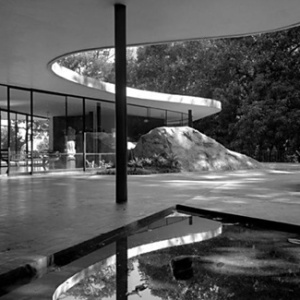
This article aims to demonstrate how Le Corbusier -through the trips taken to Rio de Janeiro in 1929 and 1936- not only set forth the foundation of modern architecture in the country but also questioned the relationship between built space and nature. In the face of a completely different environment from that of the Old World –since it was tropical nature which prevailed-, the French-Swiss architect found himself impelled to play a game between the establishment of man and the presence of nature. Lucio Costa and the first generation of Rio's modern architects (Oscar Niemeyer, Alfonso Eduardo Reidy, Jorge Moreira and Roberto brothers among others) contributed significantly to the original interpretations subverting and expanding the categories proposed by Le Corbusier. Such endeavor -which developed the diverse means of a fluidity between the inside and the outside as well as between building and landscape- had ultimately an impact on the visual apprehension of the building along with the iconic features of this landscape: tropical forest, Pão de Açúcar and Guanabara Bay.
Downloads
Published
How to Cite
Issue
Section
License
Open access policy
A&P Continuidad is a non-profit and open access publication. According to Mexico Declaration on Cultural Policies, the journal distribution is submitted to Creative Commons Attribution-Noncommercial-ShareAlike 4.0 International Public License (CC BY-NC-SA). “Neither the commercial use of the original work nor that of the possible derivative works are allowed. The distribution of derivative works should be submitted to the license regulating the original work. This license is not free.”
A&P Continuidad authorizes the partial or full reproduction of texts and graphs provided that the source is cited. Authors are exclusively responsible for the criteria expressed in the articles which do not necessarily reflect the opinion of the Editorial Committee or that of the Direction Board. The copyright of the published articles pertains to their authors or publishers.
Transfer of rights
The acceptance of an article to be published implies the author’s transfer of rights to the journal. Authors continue to have the right to use the material in future books or publications, approve or veto the republication of their works as well as the rights related to patents or other rights. Transfer of rights form may be downloaded here.





























 This OJS site and its metadata are under a