
Archive as a space in construction
Challenges, mediation, and the future of the Department of Documentation and Information
DOI:
https://doi.org/10.35305/23626097v12i23.526Keywords:
archive, architecture, design, urbanism, documentation.Abstract
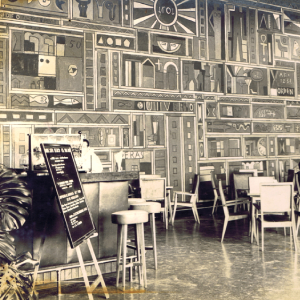
This article aims to reflect on the history and contemporary role of the architecture, design, and urban planning archive of the Department of Documentation and Information (DDI) at the Institute of History, which is part of the Faculty of Architecture, Design, and Urbanism of the University of the Republic—the only archive of this kind in Uruguay.
It is essential to consider the transformative role of knowledge offered by a university archive that, in addition to receiving, cataloging, preserving, enriching, and communicating documents related to design disciplines, it also develops teaching, research, outreach, and dissemination activities.
From this standpoint, the article seeks to analyze the current role of architecture and design archives in the construction of knowledge, the generation of synergies enabling the acquisition of new content, and the ongoing interaction with both the academic community and the society at large. Some mediation and knowledge production practices carried out by the DDI—as well as the tensions and challenges it faces when aligning its work with the university’s core functions—serve as examples that highlight the importance of ensuring public access as well as the critical activation of archival collections with a view toward both local and regional contexts.
Downloads
Metrics
References
Eco, U. (2010). Nadie acabará con los libros (J.-P. Carrière, Entrevista; J. C. de Isasa, Trad.). Lumen.
García Canclini, N. (2001). Culturas híbridas: Estrategias para entrar y salir de la modernidad. Paidós.
Jelin, E. (2002). Los trabajos de la memoria. Siglo XXI Editores.
Koselleck, R. (1993). Futuro pasado: para una semántica de los tiempos históricos, Barcelona, Paidós.
Published
How to Cite
Issue
Section
License
Copyright (c) 2025 A&P Continuidad

This work is licensed under a Creative Commons Attribution-NonCommercial-ShareAlike 4.0 International License.
Open access policy
A&P Continuidad is a non-profit and open access publication. According to Mexico Declaration on Cultural Policies, the journal distribution is submitted to Creative Commons Attribution-Noncommercial-ShareAlike 4.0 International Public License (CC BY-NC-SA). “Neither the commercial use of the original work nor that of the possible derivative works are allowed. The distribution of derivative works should be submitted to the license regulating the original work. This license is not free.”
A&P Continuidad authorizes the partial or full reproduction of texts and graphs provided that the source is cited. Authors are exclusively responsible for the criteria expressed in the articles which do not necessarily reflect the opinion of the Editorial Committee or that of the Direction Board. The copyright of the published articles pertains to their authors or publishers.
Transfer of rights
The acceptance of an article to be published implies the author’s transfer of rights to the journal. Authors continue to have the right to use the material in future books or publications, approve or veto the republication of their works as well as the rights related to patents or other rights. Transfer of rights form may be downloaded here.
























 This OJS site and its metadata are under a