
The exile space
Nostalgia as a principle
DOI:
https://doi.org/10.35305/23626097v4i6.35Keywords:
nostalgia, trip, reconstructionAbstract
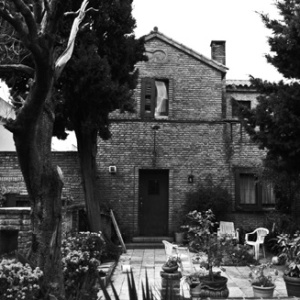
This article attempts to analyze the role of nostalgia understood as the emotional distress that remoteness entails. The spatial and visual nature of exile and migration wounds turns nostalgia into a creativity channel which seeks to reconstruct the places that have been left. Some works of Alejo Carpentier, José Pedro Díaz, Joaquín Torres García and Antonio Bonet are analyzed from the perspectives of literature, art and finally architecture in order to trace the heuristic power of pain –algia- that homesickness –nostos- implies. While writers express restraint by means of irony and deception, painter Torres García reconstructs the past through a merciless and unrestrained work. This is also shown when reproducing his Catalan home in Montevideo: architects Juan Menchaca and Ernesto Leborgne work on his aesthetic Mediterranean project. Antonio Bonet, in turn, intends to reconstruct his past in Barcelona (a modern and vernacular one) but this goes against the Andalusia’s folklore of his clients: Rafael Alberti and Rosa León.
Downloads
Downloads
Published
How to Cite
Issue
Section
License
Open access policy
A&P Continuidad is a non-profit and open access publication. According to Mexico Declaration on Cultural Policies, the journal distribution is submitted to Creative Commons Attribution-Noncommercial-ShareAlike 4.0 International Public License (CC BY-NC-SA). “Neither the commercial use of the original work nor that of the possible derivative works are allowed. The distribution of derivative works should be submitted to the license regulating the original work. This license is not free.”
A&P Continuidad authorizes the partial or full reproduction of texts and graphs provided that the source is cited. Authors are exclusively responsible for the criteria expressed in the articles which do not necessarily reflect the opinion of the Editorial Committee or that of the Direction Board. The copyright of the published articles pertains to their authors or publishers.
Transfer of rights
The acceptance of an article to be published implies the author’s transfer of rights to the journal. Authors continue to have the right to use the material in future books or publications, approve or veto the republication of their works as well as the rights related to patents or other rights. Transfer of rights form may be downloaded here.





























 This OJS site and its metadata are under a