
About axonometric drawing
Keywords:
systems, axonometric drawing, graphic operationsAbstract
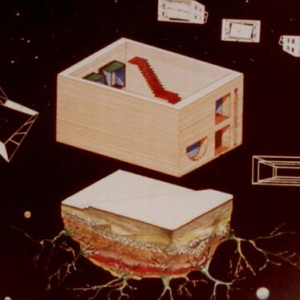
Axonometric drawing is one of the three graphic representation systems composing the basis of the architect’s own language. However, our academic field has played down this role for a long time viewing it as the brief material description of a building detail. The teaching and pedagogical work of architect Fernando Boix has contended with this view placing axonometric drawing at the center of the disciplinary debate about both analysis and production of new architectural works. Since he has been concerned with systems as well as combinatorial operations among them, he has addressed the concepts of graphic analysis and architectural heritage from an exclusively disciplinary approach. Just as Leonardo Da Vinci dissects corpses in order to study the circulatory system, muscle composition and bone structure of the human body; the axonometric drawing disassembles the architectural work in order to minutely analyze its pieces. Beyond the mere examination of the sketch grounded on the exterior perspective, this becomes an almost laboratory activity able to carry disciplinary values.
Downloads
Downloads
Published
How to Cite
Issue
Section
License
Open access policy
A&P Continuidad is a non-profit and open access publication. According to Mexico Declaration on Cultural Policies, the journal distribution is submitted to Creative Commons Attribution-Noncommercial-ShareAlike 4.0 International Public License (CC BY-NC-SA). “Neither the commercial use of the original work nor that of the possible derivative works are allowed. The distribution of derivative works should be submitted to the license regulating the original work. This license is not free.”
A&P Continuidad authorizes the partial or full reproduction of texts and graphs provided that the source is cited. Authors are exclusively responsible for the criteria expressed in the articles which do not necessarily reflect the opinion of the Editorial Committee or that of the Direction Board. The copyright of the published articles pertains to their authors or publishers.
Transfer of rights
The acceptance of an article to be published implies the author’s transfer of rights to the journal. Authors continue to have the right to use the material in future books or publications, approve or veto the republication of their works as well as the rights related to patents or other rights. Transfer of rights form may be downloaded here.





























 This OJS site and its metadata are under a