
Transformations in the rural habitat since the COVID-19 pandemic
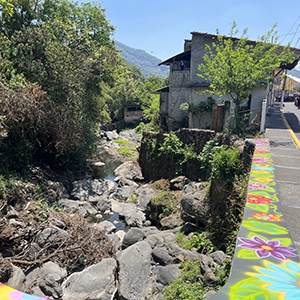
Ixhuacan de los Reyes, Veracruz
DOI:
https://doi.org/10.35305/23626097v9i16.365Keywords:
rural habitat, socio-economics, health, education, housingAbstract
The COVID-19 contingency period in the Mexican context has both highlighted and intensified many of the previously perceived problems dealing with economy, health, education, and housing. The case of Ixhuacán de los Reyes is addressed: a rural community which had the opportunity to carry out extension work more than five years ago, and in which there has been a close relationship between authorities and inhabitants. The aim is to propose strategies achieving an adequate sustainable habitat. This is developed by means of a qualitative methodology with an ethnographic approach along with the analysis of testimonies in which authorities and civil society members portray the most difficult moments experienced during this period. The results show different habitability conditions in the city and in rural environments which are related to uses and customs of the inhabitants of these regions. The conclusions demonstrate the urgency of a transformation in the current way of life to preserve the residential habitat and the life quality of the inhabitants.
Downloads
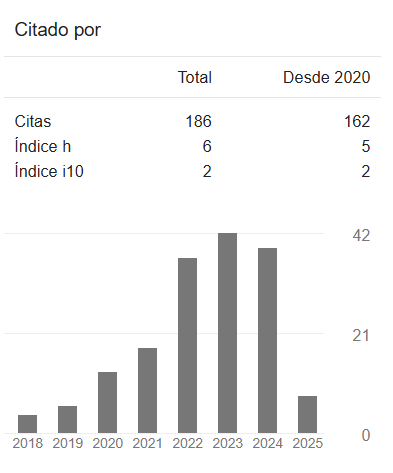
Metrics
References
ACNUDH. (2020a). Los pueblos y cominidades indígenas frente al Covid-19 en México. Recuperado de https://www.ohchr.org/SP/Pages/Home.aspx
ACNUDH. (2020b). Covid-19: Las medidas de emergencia no deben servir de pretexto para abusos y vulneraciones de los derechos humanos. Recuperado de https://www.ohchr.org/SP/NewsEvents/Pages/DisplayNews.aspx?NewsID=25828&LangID=S
Armenta, C., García, J. y Palacios, A. (2020). La vulnerabilidad de la vivienda como indicador del contagio comunitatio ante la COVID-19 en México (IVIV-COVID). Vivienda Infonavit, 4(1), 24-37.
Betancourt, M., Bragos, O. y Pontoni, S. (2021). Territorios y pandemia, ¿un antes y un después? A&P Continuidad, 8(14), 6-9. Doi: https://doi.org/10.35305/23626097v8i14.324
Castro, A. (2020). Respuesta a la pandemia de COVID-19 en poblaciones urbano-marginales y rurales en América Latina. Revista digital del Programa de las Naciones Unidas para el Desarrollo.
CONEVAL. (2022). Criterios generales para la determinación de las zonas de atención prioritaria. Marco Jurídico. Recuperado de https://www.coneval.org.mx/Medicion/Paginas/Criterios-ZAP.aspx
CONEVAL. (2021, febrero 9). El CONEVAL da a conocer el informe de evaluación de la política de desarrollo social 2020. Recuperado de https://www.coneval.org.mx/SalaPrensa/Comunicadosprensa/Documents/2021/COMUNICADO_01_IEPDS_2020.pdf
Cortés, I. (2020). Covid-19 y una estrategia de salud pública para el México rural e indígena. Ichan Tecolotl. Recuperado de https://ichan.ciesas.edu.mx/covid-19-y-una-estrategia-de-salud-publica-para-el-mexico-rural-e-indigena/
Di Virgilio, M. (2021). Desigualdades, hábitat y vivienda en América Latina. Nueva Sociedad, (293), 77-92.
Echeverría, C. (2003). Hábitat vs. Vivienda: mirada crítica sobre el viviendismo. Seminario-Foro Internacional “La construcción del hábitat popular: Experiencias de intervenciones urbanas, arquitectónicas, tecnológicas y pedagógicas”. Universidad Nacional de Colombia, Medellín, Colombia.
Gobierno de México. (2020). Secretaría del Bienestar participará en la implementación del modelo de salud comunitaria. Recuperado de https://www.gob.mx/bienestar/prensa/secretaria-de-bienestar-participara-en-la-implementacion-del-modelo-de-salud-comunitaria
Gobierno de Veracruz. (2016). Ixhuacán de los Reyes. Sistema de Información Municipal. Cuadernillos 2016. Veracruz, México: Secretaría de Finanzas y Planeación del Estado de Veracruz.
INEGI. (2016). Cuadernillos municipales. Ixhuacán de los Reyes, México: Gobierno del Estado de Veracruz. Disponible en: http://ceieg.veracruz.gob.mx/wp-content/uploads/sites/21/2016/05/Ixhuacán-de-los-Reyes.pdf
INEGI. (2021). Cuadernillos municipales. Ixhuacán de los Reyes, México: Gobierno del Estado de Veracruz.
Disponible en: http://ceieg.veracruz.gob.mx/wp-content/uploads/sites/21/2021/06/IXHUACÁN-D-ELOS-REYES_
INEGI. (2021, 25 de enero). En México somos 126 014 024 habitantes: Censo de Población y Vivienda 2020. Comunicado de prensa núm. 24/21, 25 de enero de 2021. Disponible en https://www.inegi.org.mx/contenidos/saladeprensa/boletines/2021/EstSociodemo/ResultCenso2020_Nal.pdf
OCDE. (2020). La crisis del COVID-19 destaca el aumento de las disparidades regionales en la atención de la salud y la economía, dice la OCDE. Recuperado de https://www.oecd.org/centrodemexico/medios/panoramadelasregionesyciudades2020.htm#:~:text=dice%20la%20OCDE-,La%20crisis%20del%20COVID%2D19%20destaca%20el%20aumento%20de%20las,la%20econom%C3%ADa%2C%20dice%20la%20OCDE&text=En%20algunas%20regiones%20de%20M%C3%A9xico,riesgo%20de%20contraer%20enfermedades%20fatales.
ONU. (2019). Vivienda y los ODS en México. ONU-Habitat-INFONAVIT.
Oropeza, D. (2021). Docentes de a pie. Enseñar en la pandemia. Ciudad, México: Para Leer en Libertad - Rosa Luxemburg Stiftung. Recuperado de https://brigadaparaleerenlibertad.com/libro/docentes-de-a-pie-ensenar-en-la-pandemia
Quicaña, E. (2020). Efectos de la COVID-19 en la economía rural de América, Latina. Nota técnica regional: Panorama Laboral en tiempos de la COVID-19. Organización Internacional del Trabajo. Recuperado de https://www.ilo.org/wcmsp5/groups/public/---americas/---ro-lima/documents/publication/wcms_760656.pdf
Quintero, G. y López, G. (2020, 25 de septiembre). Apuesta turismo por más oportunidades para zonas rurales. Boletín UNAM-DGCS-803. Recuperado de https://www.dgcs.unam.mx/boletin/bdboletin/2020_803.html
Salazar, B. y Vázquez, L. (2021). Percepción de la calidad de vida en la vivienda. Periodo de contingencia por COVID-19 en la ciudad de Xalapa-México, ACE: Architecture, City and Environment, 16(46), 9492. doi: http://dx.doi.org/10.5821/ace.16.46.9492
Sassen, S. y Betancourt, M. (2021). Una nueva época brutal y transnacional. A&P Continuidad, 8(14). 28-33. doi: https://doi.org/10.35305/23626097v8i14.308
SEGOB. (2021, noviembre 29). DECRETO por el que se formula la Declaratoria de las Zonas de Atención Prioritaria para el año 2022. Diario Oficial de la Federación. México. Recuperado de https://www.dof.gob.mx/nota_detalle.php?codigo=5636711&fecha=29/11/2021
Schilmann, A. (2020). Vulnerabilidad a COVID-19 en poblaciones rurales y peri-urbanas de México por el uso doméstico de leña. Organización Panamericana de la Salud. Recuperado de https://www.paho.org/es/eventos/vulnerabilidad-covid-19-poblaciones-rurales-peri-urbanas-mexico-por-uso-domestico-lena y https://www.youtube.com/watch?v=z13uLoHmjJk
Vilaboa, J., Platas, D. y Zetina, P. (2021). El reto del sector rural de México ante la Covid-19. Revista Mexicana de Ciencias Políticas y Sociales UNAM, 66(242), 419-442. doi: http://dx.doi.org/10.22201/fcpys.2448492xe.2021.242.77322
Published
How to Cite
Issue
Section
License
Open access policy
A&P Continuidad is a non-profit and open access publication. According to Mexico Declaration on Cultural Policies, the journal distribution is submitted to Creative Commons Attribution-Noncommercial-ShareAlike 4.0 International Public License (CC BY-NC-SA). “Neither the commercial use of the original work nor that of the possible derivative works are allowed. The distribution of derivative works should be submitted to the license regulating the original work. This license is not free.”
A&P Continuidad authorizes the partial or full reproduction of texts and graphs provided that the source is cited. Authors are exclusively responsible for the criteria expressed in the articles which do not necessarily reflect the opinion of the Editorial Committee or that of the Direction Board. The copyright of the published articles pertains to their authors or publishers.
Transfer of rights
The acceptance of an article to be published implies the author’s transfer of rights to the journal. Authors continue to have the right to use the material in future books or publications, approve or veto the republication of their works as well as the rights related to patents or other rights. Transfer of rights form may be downloaded here.




























 This OJS site and its metadata are under a