
Biomateriality as an alternative to productivist aestheticism
DOI:
https://doi.org/10.35305/23626097v8i15.330Keywords:
bio-based materials, aura, aesthetics, myceliumAbstract
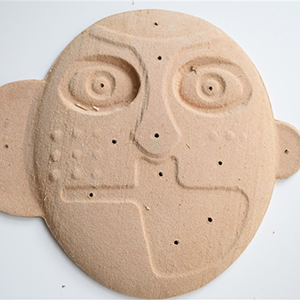
Biomateriality regarded as a material comprised of a living organism because it is -or has been- part of it, or, because it is a product of this organism, is increasingly present in the design field. However, bio-based materials are often envisaged as a reductionist alternative which is just grounded on the concept of plastic substitute without seriously questioning the underlying logic of consumption and the means of production. This requires dealing with biomateriality from an ontological perspective, that is, as an alternative dissenting with the current ways of production which brings about new aesthetic and formal principles. The sustainability of bio-based materials is derived from the use of not only different materials but also different global means of production and consumption which, in turn, create new product design approaches that change the universal patterns of industrial design. Therefore, biomateriality should not be addressed within the framework of the current global market logic since, in doing so, it would be subject to the commodification posed by the present consumer society.
Downloads
Metrics
References
Adorno, Th. W. (2004). Teoría Estética. (J. Navarro Pérez, Trad.) Madrid: Akal. (Trabajo original publicado en 1970).
Ciafardo, M. (Comp.) (2020). La enseñanza del lenguaje visual: bases para la construcción de una propuesta alternativa. Recuperado de http://papelcosido.fba.unlp.edu.ar/pdf/libros/Ense%C3%B1anza-lenguaje-visual.pdf
Colombres, A. (2013). Teoría Transcultural del Arte: hacia un pensamiento visual independiente. Ciudad Autónoma de Buenos Aires: Del Sol. (Trabajo original publicado en 2005).
Dorfles, G. (1984). Símbolo, comunicación y consumo. (M. R, Viale, Trad.). Barcelona: Lumen (Trabajo original publicado en 1967)
Dorfles, G. (2010). Falsificaciones y fetiches: La adulteración en el arte y sociedad. (J.E. Ceballos, Trad.) Madrid: sequitur. (Trabajo original publicado en 2009).
Escobar, T. (2021). Aura Latente: Estética. Ética. Política. Técnica. Ciudad Autónoma de Buenos Aires: Tinta Limón.
Horkhaimer, M. y Adorno, Th. W. (1998). Dialéctica de la Ilustración: Fragmentos filosóficos. (J.J. Sánchez, Trad.) Madrid: Trotta. (Trabajo original publicado en 1969)
Simondon, G. (2017). Sobre la técnica:1953-1983. (M. Martínez y P. Rodríguez, Trad.) Ciudad Autónoma de Buenos Aires: Cactus. (Trabajo original publicado en 2014).
Vera Barros, T. (Comp). (2018). Estética de la Imagen: fotografía, cine y pintura. Walter Benjamin. Ciudad Autónoma de Buenos Aires: la marca
Published
How to Cite
Issue
Section
License
Open access policy
A&P Continuidad is a non-profit and open access publication. According to Mexico Declaration on Cultural Policies, the journal distribution is submitted to Creative Commons Attribution-Noncommercial-ShareAlike 4.0 International Public License (CC BY-NC-SA). “Neither the commercial use of the original work nor that of the possible derivative works are allowed. The distribution of derivative works should be submitted to the license regulating the original work. This license is not free.”
A&P Continuidad authorizes the partial or full reproduction of texts and graphs provided that the source is cited. Authors are exclusively responsible for the criteria expressed in the articles which do not necessarily reflect the opinion of the Editorial Committee or that of the Direction Board. The copyright of the published articles pertains to their authors or publishers.
Transfer of rights
The acceptance of an article to be published implies the author’s transfer of rights to the journal. Authors continue to have the right to use the material in future books or publications, approve or veto the republication of their works as well as the rights related to patents or other rights. Transfer of rights form may be downloaded here.


























 This OJS site and its metadata are under a