Curatorial Practices for Meanings, Narratives, and Contested Territories
Interview with Maite Borjabad López-Pastor, curator, architect, and researcher
DOI:
https://doi.org/10.35305/23626097v12i22.522Keywords:
curatorial practices, violence, neoliberalism, art, museumAbstract
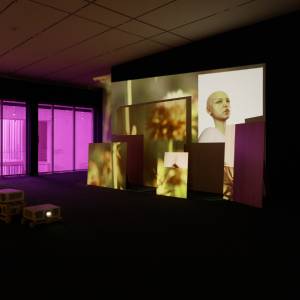
In ways never more explicit, the territories of life, meaning, justice, and modes of coexistence are nowadays under strain. In addition to the already familiar forms of dispute, there are new arenas of conflict driven by a profound rethinking of the dynamics of capital and justice as a universal aspiration including the validity of human rights as an accepted paradigm. Money, power, patriarchy, and violence have been dressed up in new clothes to be introduced shamelessly as the starting point, the means, and the end. Our attempt is to seek new responses to these phenomena with strategies such as networking, interdisciplinarity, collaborative actions, and multisite agency. Sometimes imagined as marginal or accessory, practices such as art, architecture, and urban planning have become central pieces in the processes of accumulation, and undoubtedly, a central dispute is to attain their relocation within the processes of emancipation. This conversation revolves around the idea of curatorial practice as a means of knowledge construction, action and combat. The exhibition space shapes the understanding of the world seeking new answers and actions for living in it.
Downloads
Metrics
References
Maalouf, A. (2012). Identidades asesinas. Madrid, España: Alianza Editorial.
Borjabad López-Pastor, M. (2024). La producción de la otredad [Texto curatorial de la exposición]. Barcelona, España: Fomento de las Artes y del Diseño (FAD).
Borjabad López-Pastor, M. (2021). If Only This Mountain Between Us Could Be Ground to Dust [Texto curatorial de la exposición]. Chicago, Estados Unidos: Art Institute.
Published
How to Cite
Issue
Section
License
Copyright (c) 2025 A&P Continuidad

This work is licensed under a Creative Commons Attribution-NonCommercial-ShareAlike 4.0 International License.
Open access policy
A&P Continuidad is a non-profit and open access publication. According to Mexico Declaration on Cultural Policies, the journal distribution is submitted to Creative Commons Attribution-Noncommercial-ShareAlike 4.0 International Public License (CC BY-NC-SA). “Neither the commercial use of the original work nor that of the possible derivative works are allowed. The distribution of derivative works should be submitted to the license regulating the original work. This license is not free.”
A&P Continuidad authorizes the partial or full reproduction of texts and graphs provided that the source is cited. Authors are exclusively responsible for the criteria expressed in the articles which do not necessarily reflect the opinion of the Editorial Committee or that of the Direction Board. The copyright of the published articles pertains to their authors or publishers.
Transfer of rights
The acceptance of an article to be published implies the author’s transfer of rights to the journal. Authors continue to have the right to use the material in future books or publications, approve or veto the republication of their works as well as the rights related to patents or other rights. Transfer of rights form may be downloaded here.






















 This OJS site and its metadata are under a